"We are all sad that that tree is gone," Helotes Mayor Rich Whitehead told MySA at the end of September. He was talking about the oak that stood in front of the old Sonic on Bandera Road until July. In the same interview, he said that for all the anger online, few residents had spoken up at public meetings, where it might have counted most.
Ten days later the city adopted its answer to that tree, and his point held up. The Helotes City Council approved a rewritten vegetation code on Oct. 8. On the city's own recording of that meeting, no one had signed up to comment during the public hearing. The new rules make it much more expensive to take down a large tree. They also leave the next hard case where this one would have landed, which is in a room where the public can be heard.
What Came Down in July
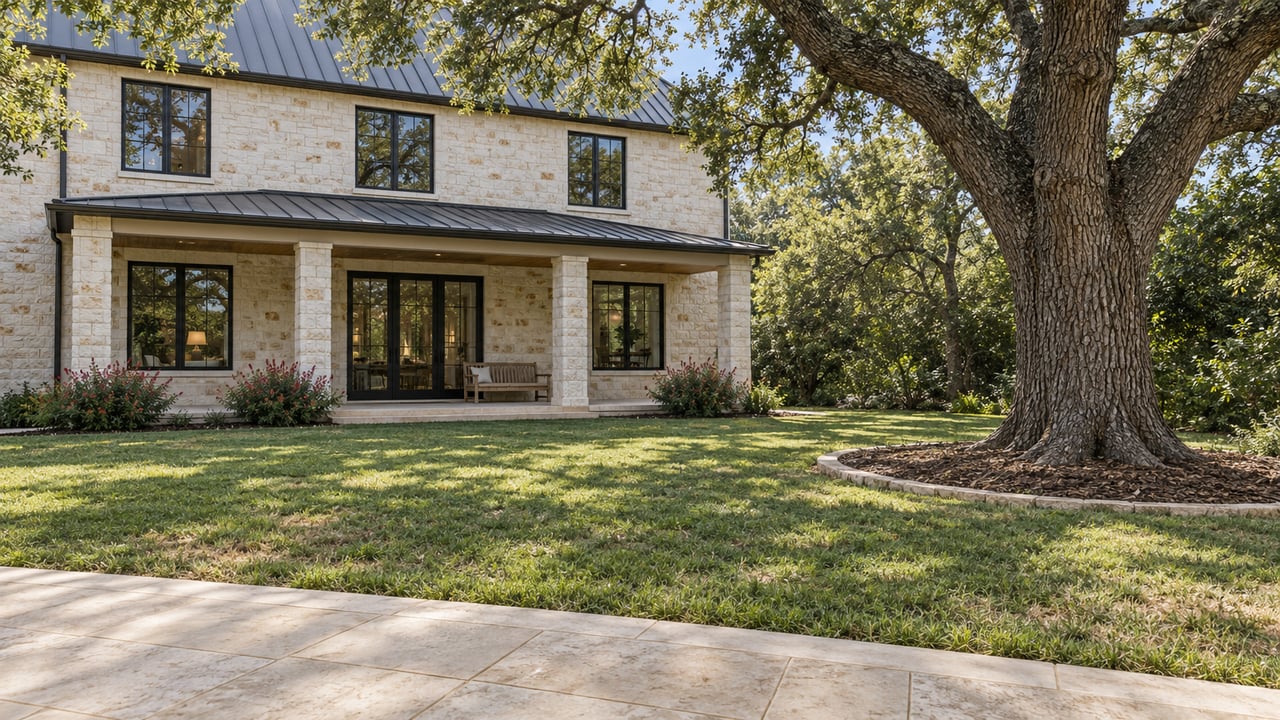
The oak was reported to be about 100 years old. Developers removed it to make way for a 7Brew coffee shop at the former Sonic site. A city hearing notice from April describes 7Brew as a drive-through-only coffee chain that planned to reuse the site's existing drive-through layout. WhatNow gave the address as 12405 Bandera Road. According to MySA, residents criticized the removal because they saw the tree as part of Helotes' Hill Country character. The mayor also said 7Brew was legally allowed to take it down under the rules in place at the time.
Those rules dated to 2008. Whitehead told MySA that city staff were already rewriting the vegetation code when the controversy began. A state filing with TDLR lists Oct. 1, 2026, as the estimated construction completion date for the 7Brew project. That filing is a construction estimate, not an opening announcement.
What Council Actually Passed
The city announced hearings on Chapter 94, the vegetation chapter of the city code, in a public notice dated Sept. 2. Planning and Zoning held its public hearing and heard a staff overview on Oct. 6. At the Oct. 8 council meeting, which was the second and final reading, council approved the ordinance as written with one amendment that set the mitigation fee at $375 per inch. The motion carried.
Here is how the main numbers compare with the old code, based on the ordinance packet and the council recording:
| Provision |
Before Oct. 8 |
After Oct. 8 |
| Mitigation fee per inch |
$150 |
$375 |
| Heritage tree mitigation ratio |
3:1 |
3:1, unchanged |
| Penalty for removal without authorization |
$500 per caliper inch |
$500 per caliper inch |
| Proposed "Historic" tree class |
Proposed in draft |
Removed |
| Proposed 5:1 or 10:1 ratios for the largest trees |
Under consideration |
Dropped |
The code defines a heritage tree two ways. For a protected large species, it is a tree with a trunk greater than 24 inches in caliper. For a protected small species, it is a tree with a trunk greater than 8 inches. At the meeting, the city's public works director explained that a heritage tree removed below the required preservation threshold is mitigated at three replacement inches for every inch lost. He added that this ratio has been in place since the rule began and has not been challenged in court, to his knowledge.
Staff also added limits on replanting certain invasive species and a preference for native species. Council passed both as drafted.
Why the Fee Stopped at $375
That figure comes from an actual purchase price. The staff memo says the public works director first found that the old $150 fee was in line with standard mitigation fees in this part of Texas. He then priced a replacement directly by buying a Monterrey oak of about two caliper inches from a local vendor and having Helotes Public Works staff plant it with city labor and materials. The total came to about $375 per inch. Monterrey oak was used as the benchmark because developers who choose to replant often use it, and it is a preferred species.
That same reasoning explains why the fee is not higher. One council member asked whether the city could set the fee above $375 so the ordinance would not need updating every year. The answer from the dais was that the city must show "rough proportionality" between the fee and the real cost, and that going above $375 would be difficult to defend legally. Council members also noted that the fee can be raised later through the city's fee schedule.
The same limit removed the steeper ratios from the draft. According to the staff memo, the public works director concluded that 5:1 or 10:1 mitigation for the largest trees might not meet the "Essential Nexus and/or Rough Proportionality" standards that apply when a city places conditions on development. Under that standard, the fee is tied to what it costs to replace the lost inches.
Your Backyard Oak Sits Mostly Outside This Code
The rules are aimed at development. The removal and replanting sections apply to "commercial or residential subdivision development." The code defines a residential subdivision development project as property platted for single-family home construction.
The ordinance text lists several categories that are exempt from its restrictions and permit requirements:
- Non-contiguous established single-family homes of three acres or less, platted or unplatted, that are occupied by an owner or a renter and located in a residential zoning district
- Non-contiguous vacant single-family residential lots of three acres or less, platted or unplatted, in a residential zoning district
- Either of those categories on more than three acres, if the property is in a subdivision whose deed restrictions prohibit dividing it
- Licensed plant and tree nurseries
- Municipal functions and activities of the City of Helotes
The single-family exemption in the packet carries the 2008 ordinance stamp, which means this part of the code was carried forward unchanged. The code also defines a "City Arborist" as a city employee who oversees tree preservation standards and makes written determinations when a protected tree is a hazard.
Council also set aside the pieces that would have reached into more yards. It chose not to adopt green space requirements for residential or commercial lots, did not regulate artificial turf beyond adding a definition, and did not create incentives for businesses that preserve heritage trees. Staff plans to bring those topics back to council in early to mid-2027.
Where the Next Oak Gets Decided
The mayor explained to MySA what the new rules can and cannot do. "It makes it more costly because now you have to plant significantly more trees," he said. In his view, that makes it much less likely a heritage oak gets cut down and more likely a developer has to ask for a variance, "which increases the opportunities for city council to have direct influence on the outcome."
He also described the limits. A developer who can "color within the lines of a stricter ordinance" would never come before council at all, he told MySA, and the changes do not guarantee that a tree like the Bandera Road oak could never be removed again.
So the ordinance does two things. It raises the cost of removing a tree, and it sends the hardest cases to council as variance requests, where residents can speak on the record. The second part only works when residents attend. The Bandera Road oak drew enough attention to help push a rewrite of a 2008 code, yet the final hearing on that rewrite had an empty sign-up sheet.
The hearings took place at 12951 Bandera Road. The next scheduled session about Helotes' older streets is coming up soon.
Saturday, Oct. 17, in Old Town
The Helotes Economic Development Corporation is holding an Old Town Helotes Listening Session on Saturday, Oct. 17, from 9 to 11 a.m. It is open to anyone who owns property, owns a business, or works in the Old Town Helotes Historic District. UTSA's Center for Dialogue and Deliberation will lead small-group discussions.
The session ties to the EDC's strategic plan, which council approved in September. That plan calls for a listening campaign, more foot traffic in Old Town, a stronger Old Town business community, more Shop Helotes promotion, and a study of a possible Walk of Fame. It also lists a façade program and a study of signage reimbursement grants. Separately, the city has budgeted $325,000 in fiscal year 2027 for a citywide comprehensive master plan.
Later that same Saturday, the city hosts Paws and Pumpkins from noon to 4 p.m. It is a fall vendor market where leashed pets are welcome, and it includes a pet costume contest. The next Helotes MarketPlace runs Saturday, Nov. 7, from 9 a.m. to 3 p.m. at 14391 Riggs Road in Old Town. The market notes that dates can change because of weather.
After that, the next tree discussion is the green space and artificial turf topics staff plans to bring back in the first half of 2027. The full text of the adopted rules is in the city's Chapter 94 packet, and the debate over the fee starts about halfway through the Oct. 8 council video.
At Gill & Teich Group, we follow changes like this one because they affect the Helotes properties our neighbors own, especially where mature trees are part of what makes a lot special. If you'd like to talk through how big trees on a property factor into its value, we're glad to sit down with you, and we offer a free home valuation whenever you're ready.
This article is general information, not legal, tax or financial advice. Consult a qualified professional about your situation.